
If you’ve started researching how to become a registered nurse, you’ve probably bumped into a confusing little alphabet soup: ASN, ADN, and sometimes even AAS or AS in nursing. You might be wondering whether ASN programs and ADN programs are two different things, whether one is better than the other, or whether picking the wrong letters could somehow set your career back. Take a breath, the good news is that this is almost entirely a naming issue, not a difference in what you’ll actually learn or what you’ll be qualified to do.
In this guide, we’ll clear up the ASN vs ADN confusion in plain English: what each acronym stands for, why schools use different labels for what is essentially the same credential, and most importantly, how both paths lead to the same goal of becoming a licensed registered nurse. Whether you’re searching for ASN programs Orlando, comparing options across Southwest Florida, or just trying to make sense of a school’s website, this article will help you focus on what truly matters.
ASN vs ADN: What Do the Acronyms Actually Mean?
Let’s start by spelling out the letters, because that alone resolves most of the confusion.
- ASN stands for Associate of Science in Nursing.
- ADN stands for Associate Degree in Nursing.
Notice that both phrases describe the same type of credential: an associate-level degree in nursing offered by a community college or career college. The AS in ASN simply emphasizes that the degree falls under the Associate of Science category, while ADN is a more general label that says associate degree in nursing. Different schools chose different conventions, and over time both stuck.
You may also run into a few close cousins:
- AAS in Nursing: Associate of Applied Science in Nursing.
- AS in Nursing: Associate of Science in Nursing (essentially the same idea as ASN).
When people compare ASN vs ADN, they’re usually comparing labels rather than substance. The asn nursing degree meaning is, for practical purposes, the same as the ADN nursing degree meaning: a two-year-style associate degree designed to prepare you to become a registered nurse. The differences that do exist tend to be administrative how a particular college categorizes its degrees rather than differences in your scope of practice or your eligibility to test for licensure.
Why the Naming Got So Confusing
There’s no single national body that forces every nursing school to use identical degree names, so one school’s Associate of Science in Nursing is another school’s Associate Degree in Nursing. Add in marketing copy, older program names, and regional habits, and you get a genuinely confusing landscape for someone just trying to figure out where to apply.
The key takeaway: don’t let the letters scare you off a good program or pull you toward a weaker one. What matters far more than ASN vs. ADN is whether the program is approved, accredited, and built to prepare you well for the NCLEX-RN and real clinical practice.
Do Both ASN and ADN Programs Lead to RN Licensure?
This is the question that matters most, so let’s answer it directly: yes. Whether a program is labeled as one of the available ASN Programs or as an ADN program, the purpose is the same to qualify graduates to sit for the NCLEX-RN (the National Council Licensure Examination for Registered Nurses) and pursue licensure as a registered nurse.
Here’s the path in simple terms, and it’s identical regardless of which acronym your school uses:
- Complete a state-approved associate of science in nursing program or ADN program same thing.
- Graduate and become eligible to test for licensure.
- Pass the NCLEX-RN, the standardized national exam every aspiring RN must pass.
- Apply to your state board in our region, the Florida Board of Nursing – for your RN license.
Once you’re licensed, the letters after your name are RN, not ASN or ADN. Employers hire registered nurses; the specific name of the associate degree that got you there is rarely the deciding factor. A nurse who earned an Associate of Science in Nursing and a nurse who earned an Associate Degree in Nursing can work side by side on the same unit, holding the same license and caring for the same patients.
What the NCLEX-RN Actually Tests
Because both ASN and ADN graduates take the same exam, it’s worth understanding what you’re preparing for. The NCLEX-RN uses computerized adaptive testing, meaning the difficulty of questions adjusts based on how you answer. Rather than rewarding pure memorization, it emphasizes safe, effective decision-making things like patient safety, health promotion, psychosocial needs, and physiological care including pharmacology.
Good preparation matters no matter which associate degree you hold. Effective study habits include practicing with realistic NCLEX-style questions, reviewing the rationale behind both right and wrong answers, focusing on prioritization and patient safety, and building a steady study routine well before graduation.
What You Study in ASN and ADN Programs
Since the credentials are functionally equivalent, it follows that the curricula look very similar too. A quality associate of science in nursing program or ADN program typically blends three things: general-education science, core nursing coursework, and supervised clinical practice.
On the academic side, most programs include foundational courses such as anatomy and physiology, microbiology, college-level math and English, and introductory psychology. These build the scientific reasoning and vocabulary you’ll lean on constantly. The nursing curriculum itself then layers on the heart of the program:
- Fundamentals of nursing core care skills, safety, and professional standards.
- Pharmacology, how medications work and how to administer them safely.
- Medical-surgical nursing caring for adults with a wide range of conditions.
- Maternal, pediatric, and mental health nursing care across different populations and needs.
- Nursing leadership and ethics working within a team and making sound decisions.
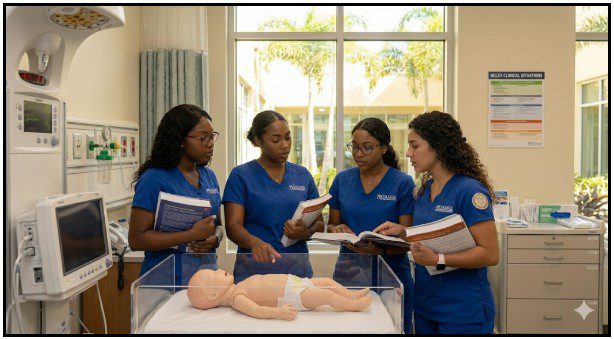
Perhaps the most valuable part of any associate nursing degree is clinical training. Under the supervision of experienced instructors, you practice real nursing skills with real patients in healthcare settings. Clinicals are where textbook knowledge becomes muscle memory – where you learn to communicate with an anxious family, administer care safely, or recognize the early signs that a patient’s condition is changing.
ASN Programs Orlando vs. Southwest Florida: Does Location Matter?
If you’re searching for ASN Programs Orlando, the Tampa area, or anywhere else in Florida, it’s smart to compare options but keep a few things in mind so the comparison is apples-to-apples.
First, remember that ASN programs in Orlando and ADN programs in Fort Myers may be describing the very same kind of degree. Don’t assume an Orlando school offers something fundamentally different just because it uses ASN while a Southwest Florida school uses ADN. Look past the label at the substance of the program.
Second, location affects more than the commute. Your clinical rotations, the local healthcare employers you might connect with, and the practicality of attending in person all depend on where you study. Southwest Florida, including Fort Myers and Cape Coral, has a growing population and an active healthcare sector, a meaningful place to train and build a nursing career close to home.
Whatever the city, the verification steps are the same: confirm the program’s approval and accreditation before you enroll. A convenient location is wonderful, but it should never outweigh whether the program will actually make you eligible for licensure.

How to Compare ASN and ADN Programs the Right Way
Once you understand that ASN vs ADN is mostly a naming question, you can redirect your energy toward the factors that genuinely affect your education and your future. When evaluating any associate nursing program whatever it’s called check these essentials:
- Approval and Accreditation (non-negotiable): Confirm the program is approved by the Florida Board of Nursing and ask about programmatic accreditation. You can verify status through recognized bodies and databases such as ACEN, ABHES, and the CHEA/DAPIP database. Accreditation isn’t just a formality – it can affect your eligibility to sit for licensure and your ability to transfer credits or bridge to a bachelor’s later. Always confirm details directly.
- Clinical opportunities: Ask where students complete clinical rotations and how much hands-on time is built in. Strong clinical experience is one of the best predictors of how prepared you’ll feel as a new nurse.
- Student support and NCLEX prep: Look for tutoring, NCLEX-RN preparation resources, and advisors who are genuinely invested in your success, especially valuable for career-changers and returning students.
- Schedule, format, and cost: Make sure the program fits your life, and understand the full cost along with what financial aid options may be available. Compare your net cost after aid, not just the sticker price.
Is an Associate Nursing Degree Right for You?
Nursing is a calling as much as a career, and the best nurses bring a particular set of strengths to the work. An associate of science in nursing or ADN path may be a great fit if you:
- Genuinely enjoy helping and caring for other people.
- Stay calm and focused under pressure.
- Pay close attention to detail and follow procedures carefully.
- Communicate clearly and compassionately.
- Are willing to commit to demanding but rewarding coursework and clinicals.
You don’t need to be a born nurse to succeed. Many of the most capable nurses started as career-changers, parents returning to work, or first-generation college students who simply showed up, worked hard, and leaned on their instructors and classmates.
It’s also worth knowing that the associate route isn’t the only on-ramp into nursing. If becoming a nurse quickly is your top priority, a Licensed Practical Nurse (LPN) program can be an even faster first step, and many people use it as a stepping stone toward becoming an RN later. The theme across LPN, ASN/ADN, and bachelor’s paths is the same: nursing offers ladders, not dead ends. You can start where it makes sense for your life today and keep climbing.
FAQs
- Is an ASN the same as an ADN?
For practical purposes, yes. ASN stands for Associate of Science in Nursing and ADN stands for Associate Degree in Nursing. Both describe an associate-level nursing degree that prepares you to sit for the NCLEX-RN and become a registered nurse. The difference is almost entirely in the name a school chooses, not in your eligibility or scope of practice.
- Can I become an RN with either an ASN or an ADN?
Yes. Whether you complete one of the available asn programs or an ADN program, graduating from a state-approved program makes you eligible to take the NCLEX-RN. Pass the exam, meet the Florida Board of Nursing’s requirements, and you can be licensed as a registered nurse. The license is identical regardless of which associate degree name appears on your diploma.
- Are ASN programs in Orlando different from ADN programs in Southwest Florida?
Not necessarily. ASN and ADN often refer to the same kind of degree, so a difference in city or in the program’s label doesn’t automatically mean a difference in what you’ll learn. Focus on each program’s approval, accreditation, clinical training, and student support rather than on the acronym or the city name.
- Should I worry about choosing ASN vs ADN?
No, this is one decision you can largely set aside. Spend your energy confirming that a program is approved and accredited, offers strong clinical experiences, and supports you toward passing the NCLEX-RN. Those factors matter far more to your future than whether the credential is labeled an associate of science in nursing or an associate degree in nursing.
Stop Comparing Acronyms; Start Building Your Nursing Future
Whether a program is called an ASN or an ADN, the goal remains the same: becoming a licensed Registered Nurse. What truly matters is choosing a quality nursing program that prepares you for the NCLEX-RN, supports your success, and helps you enter the healthcare field with confidence. At PIC College, we’re here to help you understand your options and take the next step toward a rewarding nursing career.
Ready to begin your journey? Connect with the PIC College Admissions team today and discover the nursing path that fits your goals, schedule, and future.
References