
Choosing the appropriate healthcare career might be one of the most significant decisions you’ll make. Enrolling in a Practical Nursing Program in Florida might be an ideal starting step for people who want to enter the nursing profession without going to school for years.
Practical nursing is a fulfilling career path that includes patient care, work security, and prospects for advancement. As healthcare demand in Florida continues to climb, competent Licensed Practical Nurses (LPNs) remain critical members of healthcare teams.
If you’re thinking about going to nursing school, knowing what to anticipate from a Practical Nursing Program might help you plan for success. In this guide, we will look at the curriculum, clinical experiences, skill development, licensure requirements, and career options for aspiring nurses.
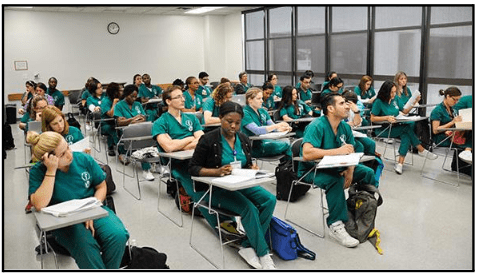
What Is a Practical Nursing Program?
The Practical Nursing Program aims to prepare students for entry-level nursing positions in a range of healthcare settings.
Students study the fundamental information and practical skills required to provide patient care while under the supervision of registered nurses and doctors.
Most programs combine:
- Classroom teaching.
- Practice skills in the laboratory.
- Clinical experiences.
- NCLEX-PN Preparation.
The ultimate aim is to train graduates to become Licensed Practical Nurses (LPNs) who can offer safe, effective patient care.
Employers in the healthcare industry rely on practical nurses to meet patient requirements in hospitals, clinics, rehabilitation centers, long-term care institutions, and home healthcare agencies.
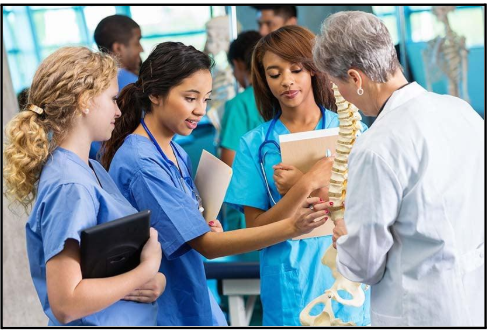
Why Choose a Practical Nursing Career?
Many students select practical nursing because it provides a speedier path to healthcare than other nursing professions.
According to the U.S. Bureau of Labor Statistics, practical nursing remains an important occupation within the healthcare sector.
Benefits include:
- Practical nursing programs are usually shorter than regular four-year healthcare degrees, allowing students to start working sooner.
- Florida’s expanding population drives more need for trained nursing personnel.
- Many LPNs continue their study and work toward Registered Nurse (RN) certification later in their careers.
- Every day, nurses have the opportunity to enhance patients’ lives and make a good influence.
What Will You Learn in a Practical Nursing Program?
An excellent Practical Nursing Program Florida program aims to develop both theoretical understanding and practical nursing abilities.
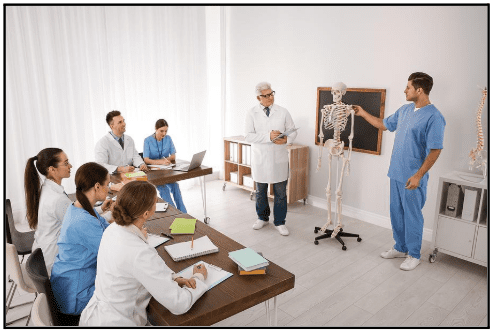
Nursing Fundamentals:
Students study the concepts of patient care, which include:
- Infection Prevention.
- Patient safety.
- Basic Nursing Procedures.
- Healthcare Ethics.
- Professional communication.
These fundamental principles serve as the foundation for all subsequent nursing practice.
Anatomy and Physiology:
Understanding the human body’s functioning is critical for patient treatment.
Students studied:
- Body systems.
- Organ functions.
- Disease Processes.
- Human development.
This information enables nurses to notice changes in patient situations and support treatment programs.
Pharmacology:
Medication administration is a significant job for practical nurses.
Topics frequently include:
- Drug Classifications.
- Medication Safety.
- Dosage calculations.
- Side effects and interactions.
- Documentation Procedures.
Strong pharmacology knowledge helps to ensure patient safety and excellent care.
Medical-Surgical Nursing:
Students learn how to care for patients with a variety of diseases and medical problems.
This course focuses on:
- Chronic illnesses.
- Acute illnesses.
- Post-operative care.
- Rehabilitation assistance.
- Patient assessment.
Medical-surgical nursing frequently makes up a large amount of nursing education.
Maternal and Pediatric Nursing:
Future nurses receive experience caring for moms, babies, and children.
Topics include:
- Prenatal Care.
- Child development.
- Family-centered care.
- Pediatric health problems.
This encounter broadens the students’ knowledge of patient demographics.
The Importance of Skills Labs:
Hands-on skills training is a very vital component of nursing education.
Students can practice nursing operations in a controlled setting before dealing with actual patients.
Common talents include:
- Recording vital signs.
- Administering medicines.
- Wound Care.
- Patient transfers.
- Infection Control Procedures.
- Documentation Techniques.
Simulation activities boost students’ confidence while reinforcing classroom learning.
Many nursing schools use contemporary simulation technologies to generate realistic healthcare scenarios.
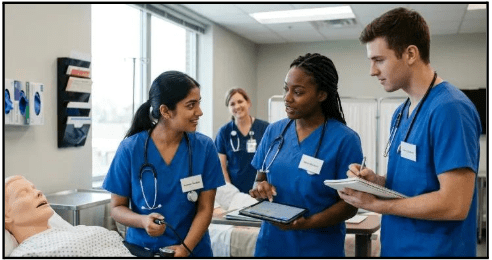
What Are Clinical Rotations?
Clinical training allows students to apply what they have learned in the classroom to real-world healthcare settings.
During clinical rotations, students work under supervision to care for patients at healthcare institutions.
Clinical experiences may occur in:
- Hospitals.
- Long-term care facilities.
- Rehabilitation Centers.
- Community healthcare environments.
- Physician’s offices.
The advantages of clinical training include:
- Students acquire practical experience with patient care duties.
- Clinical environments assist students improve their communication, collaboration, and critical thinking abilities.
- Students gain confidence in executing nursing duties through repeated practice.
- Students can gain expertise in a variety of healthcare disciplines prior to entering the job.
- Clinical education frequently becomes one of the most memorable and transforming experiences of nursing school.
- Successful practical nurses have both technical and interpersonal skills.
The key competencies include:
- Nurses contact patients, physicians, family members, and healthcare teams on a daily basis.
- Clear communication improves patient outcomes while reducing mistakes.
- Nurses in healthcare frequently need to make rapid, educated judgments.
- Patients may be in pain, fearful, or uncertain.
- Compassionate care contributes to great healthcare experiences.
- Managing many patient obligations necessitates effective time management abilities.
- Accurate drug administration and recordkeeping are essential components of nursing practice.
These abilities are useful throughout a nurse’s career.
Preparing for the NCLEX-PN Examination:
Graduating from a nursing program is just one step toward licensure.
Students must also pass the NCLEX-PN test.

The National Council Licensure Examination for Practical Nurses assesses applicants’ readiness for safe entry-level nursing practice.
The examination covers:
- Patient safety.
- Health Promotion.
- Psychosocial Care.
- Physiological Care.
Preparation strategies include:
- Practice questions.
- Review courses.
- Study groups.
- Mock exams.
- Time management approaches.
Many Practical Nursing Programs incorporate NCLEX preparation throughout the program to help students succeed.
Career Opportunities After Graduation:
After obtaining their license, graduates can seek careers in a variety of healthcare settings.
Potential employers include:
- LPNs help healthcare teams provide patient care and monitor health issues.
- Many practical nurses work with elderly patients in skilled nursing facilities.
- LPNs help people recover from accidents, surgeries, and diseases.
- Medical offices commonly hire practical nurses to help with patient care.
- Some nurses deliver care directly to patients in their homes.
This variety enables professionals to select work situations that match their interests and career aspirations.
Can You Continue Your Nursing Education?
Many practical nurses utilize their education as a stepping stone to advanced nursing certification.
Common paths include:
- LPN-to-RN programs.
- Associate’s Degree Nursing (ASN).
- Bachelor’s Science in Nursing (BSN).
Continuing your education might lead to additional responsibility and employment prospects.
Why Choose Premiere International College?
Choosing a nursing school is more than just comparing fees and program duration.
Prospective students frequently consider:
- Experienced faculty.
- Clinical training opportunities.
- Student Support Services.
- NCLEX preparation.
- Learning environment.
Premiere International College is dedicated to training future nurses via classroom education, laboratory practice, and clinical experiences that promote professional success.
Students benefit from education that focuses on developing practical nursing skills while also preparing them for licensing and job prospects.
Final Thoughts:
Enrolling in a Practical Nursing Program Florida might be the start of a rewarding healthcare career.
Nursing school provides the groundwork for becoming a Licensed Practical Nurse, including classroom education, simulation laboratories, clinical experiences, and NCLEX preparation.
Whether you want to enter the field immediately or seek higher nursing school, practical nursing is a great place to start.
The need for caring, professional nurses is increasing, making this a good time to consider your options in healthcare.
Ready to Start Your Nursing Journey?
Are you ready to put your passion in nursing into action?
Explore Premiere International College’s https://picollege.edu/application-form/ Practical Nursing Program to explore how hands-on training, clinical experience, and personalized assistance may help you prepare for a career in healthcare.
Schedule a consultation with an admissions advisor now to learn more about your nursing education options.
FAQs:
-
What will I learn in a Practical Nursing Program?
Students often study nursing basics, anatomy and physiology, pharmacology, medical-surgical nursing, maternity and pediatric nursing, patient care procedures, and medication administration, as well as hands-on clinical experience.
-
Are clinical rotations included in a Practical Nursing Program?
Yes. Clinical rotations are an important aspect of nursing education because they give supervised, hands-on patient care experience in healthcare settings such as hospitals, long-term care institutions, rehabilitation centers, and clinics.
-
Do I need to pass the NCLEX-PN exam after graduation?
Yes. Graduates must pass the NCLEX-PN (National Council Licensure Examination for Practical Nurses) to become licensed and able to work as LPNs.
-
Can I continue my education after becoming an LPN?
Absolutely. Many Licensed Practical Nurses continue their education by enrolling in LPN-to-RN bridge programs, Associate Degree Nursing (ASN) programs, or Bachelor of Science in Nursing (BSN) programs to broaden their career options and earnings potential.